AI Phone Answering for Restaurants: The 2026 Guide
How AI phone answering services help restaurants cut missed calls and recover revenue. Real pricing, tool comparisons, POS integrations, and honest limitations.
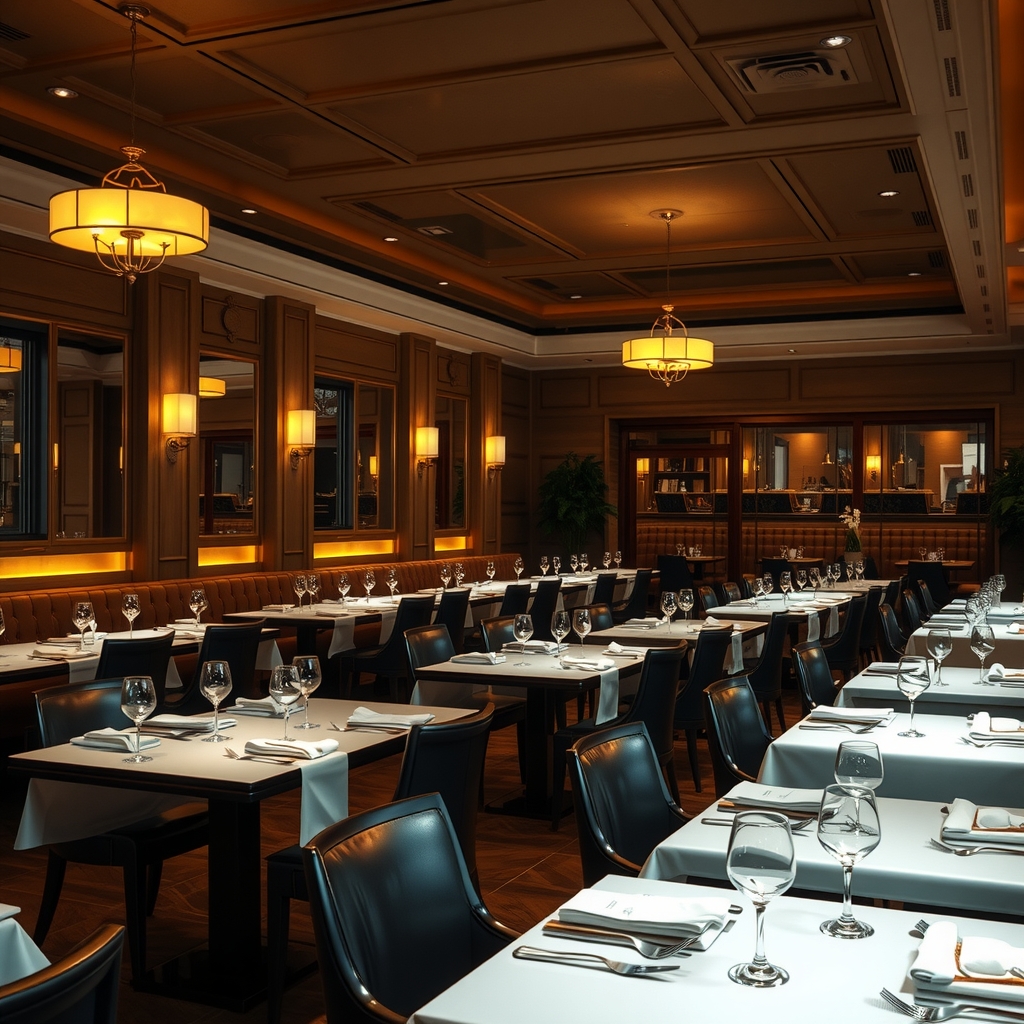
Your host is seating a party of six. Your bartender is three orders behind. And the phone is ringing for the fourth time in two minutes with nobody available to pick up.
This is not a staffing problem a new hire will fix. It is structural. Restaurants receive more inbound calls per seat than almost any other small business category, and the gap between calls received and calls answered costs the industry an estimated $20 billion a year in missed reservations and phone orders, according to QSR Magazine.
AI phone answering services are a direct response to that gap. This guide covers what these tools actually do, which ones are worth evaluating, what they cost, and when they are the wrong choice for your operation.
Why Restaurants Lose So Much Revenue on the Phone
A mid-size full-service restaurant in a busy market might handle 80 to 150 inbound calls per day during a peak week. Reservation requests, menu questions, dietary inquiries, party booking logistics, and to-go orders all arrive on the same line — and all require a human who is not already doing something else.
According to data published by Hostie, 43% of restaurant phone calls go unanswered. Of those missed callers, 85% will not try again — they call a competitor instead. The problem peaks during the dinner rush: between 5 PM and 8 PM, roughly 32% of calls are missed at precisely the window when 47% of a restaurant's daily phone orders come in.
The math is straightforward. A restaurant averaging $42 per cover, missing 120 calls per month, with a 55% conversion rate on answered calls is looking at more than $160,000 in annualized missed revenue from the phone alone — before accounting for any negative reviews from frustrated callers who could not get through.
What an AI Phone Answering Service Actually Does
An AI phone answering service answers calls when your staff cannot. Depending on the platform, it does considerably more than take a message. Modern systems built for restaurants can:
- Answer in under two seconds, 24 hours a day, with no hold queue
- Book, modify, and cancel reservations against live availability
- Answer menu questions, hours, location, and parking information
- Take phone-in food orders and route them to your POS or kitchen display
- Send confirmation texts after each interaction
- Escalate complex or emotionally charged calls to a human staff member
The underlying technology is a voice AI: a large language model paired with speech recognition and speech synthesis layers. Callers speak naturally — no press-1-for-reservations menus. The system understands conversational context, handles follow-up questions, and can manage an entire reservation booking in a single call. If you want a clear explanation of how this differs from a traditional phone tree, this overview of AI voice agents covers the distinction without the jargon.
How It Connects to Your Existing Stack
The practical question for most operators is not whether this works in principle — it is how it plugs into what you already run.
Most platforms integrate with the reservation systems restaurants already use. OpenTable has a native Voice AI product that syncs directly with your reservation book — no third-party integration required. Third-party tools like Loman AI and Maple also offer OpenTable integrations, allowing the AI to confirm, modify, and cancel bookings through natural conversation against your live inventory.
On the POS side, several platforms connect to Toast, Square, and Lightspeed to route phone orders directly to the kitchen without a staff member in the middle. Setup for standard integrations typically takes 30 minutes to a few hours.
One practical note: if your restaurant runs a custom or heavily modified POS system, expect a longer integration process. Confirm specific integration support with any vendor before you sign.
The Platforms Worth Evaluating
This market has grown quickly. The tools with the most documented restaurant-specific deployments as of mid-2026:
Slang AI — Built specifically for full-service restaurants and hospitality. Focuses on reservation management and FAQ handling. Integrates with OpenTable and Resy. Starts around $399/month. Best fit for higher-volume dining rooms where reservations are the primary phone use case.
Loman AI — Covers both reservations and phone-in food orders. Connects to OpenTable and multiple POS platforms. Base pricing starts around $149/month with per-minute overages for higher call volumes. Better suited for restaurants that take a meaningful share of orders by phone.
Hostie — Restaurant-native platform covering calls, SMS, and OpenTable integration. Starts around $199/month. Includes multilingual support and an after-hours auto-confirm reservation workflow.
Maple — Focused on inbound reservation handling with OpenTable integration. Transparent in its documentation about which call types it handles versus which get passed to a staff member.
OpenTable Voice AI — If your restaurant already runs on OpenTable, their native voice product is the lowest-friction starting point. Availability syncs automatically; no third-party integration to maintain.
Certus AI — Y Combinator-backed, positions itself as a full phone-line replacement. Covers reservations, orders, and general Q&A with multilingual and multi-accent support.
For a broader comparison that includes non-restaurant business contexts, see this comparison of AI phone answering services across industries.
What This Costs — and How to Think About ROI
Entry-level plans run $99 to $199 per month (Yelp Receptionist at $99, Loman at approximately $149, Hostie at approximately $199). Full-service platforms like Slang start closer to $399 per month. Most plans add per-minute charges — $0.05 to $0.25 per minute — once you exceed the monthly call allowance. For restaurants handling 150 or more calls per day, run the per-minute math against your expected volume before choosing based on the base price alone.
The real comparison is not against zero — it is against the alternative. A human virtual receptionist service typically runs $1.00 to $1.50 per minute. A part-time host hired specifically to manage phones during dinner service costs $18 to $25 per hour plus labor overhead in most US markets. Against those numbers, $200 to $400 per month for AI coverage is a meaningful difference.
The ROI case is strongest when you can quantify your actual missed-call rate. Pull your call log data, estimate your average ticket size, and use our ROI calculator to run the numbers against your specific operation — the result is usually more compelling than any vendor case study.
When This Is NOT the Right Solution
The limitations of AI phone answering matter more than the feature list for most operators making this decision. Be honest about the following scenarios before you sign up.
High-end fine dining with bespoke guest requests. If your callers regularly need to arrange private dining with custom menus, specific wine pairings, and special occasion details, an AI will underperform. The relationship dimension of high-end hospitality is exactly what these systems cannot replicate. A guest who has to navigate an AI to plan an anniversary dinner may simply choose not to return.
Very low call volume. If you receive fewer than 20 to 30 calls per day, the platform cost will not pay back at that volume. Manual coverage is manageable, and the overhead of maintaining the AI knowledge base is not worth it.
High-noise environments. Open kitchens, live music venues, and high-volume bars often generate background noise that bleeds into phone calls. Speech recognition accuracy degrades in noisy audio — this is a persistent technical limitation across all platforms, not just the cheaper ones.
Callers with strong accents or non-standard speech patterns. Recognition accuracy varies by accent, dialect, and speaking pace. If a significant portion of your callers speak English as a second language, test the specific platform with a sample of your actual callers during a trial period before committing.
Complaint handling and emotionally charged situations. No AI system can de-escalate an upset guest effectively. These systems can transfer to a human, but if no staff member is available to receive that transfer during a dinner rush, the interaction ends poorly. Your escalation path needs to be real and staffed — not theoretical.
Restaurants with rapidly changing menus or frequent operational changes. The AI knowledge base requires active maintenance. If your hours, menu, or policies change often and you do not have a process for keeping the system current, it will give callers incorrect information — which is worse than having no AI at all.
What to Verify Before You Commit
Questions that separate vendors with genuine restaurant experience from those repackaging generic call center software:
- What does the escalation flow look like when the AI fails? Ask to see a demo of a mishandled call — not just the success path.
- Which POS and reservation systems do you integrate with natively? Get a specific list. Vague answers about supporting most systems are not useful.
- Can I access call recordings during the trial period? Any reputable vendor will allow you to audit actual performance. If they decline, that is informative.
- Is this a month-to-month contract? Locking in before you have validated real-world performance is a bad deal. Most serious vendors offer monthly terms for initial pilots.
- What is your accuracy on multi-modifier orders? A large pepperoni with extra cheese, no olives, and garlic crust is a different thing than a pizza. Relevant if you take food orders by phone.
How to Start Without Overcommitting
The lowest-risk path is a 30-day pilot limited to after-hours calls only. You get real performance data from your actual callers without putting your dinner service at risk. Most platforms support this configuration.
During the trial, track three metrics: the percentage of calls handled without escalation, the reservation conversion rate compared to your historical baseline, and any guest feedback tied to the AI experience. Those three numbers will tell you more than any vendor-provided case study.
If the data holds up after 30 days, expanding to full coverage is a straightforward decision. If it does not, you have learned that cheaply.
If you want help scoping the right configuration for your restaurant — your specific POS, reservation system, call volume, and staffing context — book a demo call and we will walk through what makes sense for your operation.
Frequently asked questions
How much does an AI phone answering service for restaurants cost?
Entry-level plans start at $99 to $199 per month. Platforms built specifically for full-service restaurants, like Slang AI, start closer to $399 per month. Most plans add per-minute charges of $0.05 to $0.25 once you exceed your monthly call allotment.
Can an AI phone system take food orders and route them to my kitchen?
Yes. Platforms like Loman AI and Certus AI can take phone orders and push them directly to your POS — including Square, Toast, and Lightspeed. Accuracy depends on how thoroughly the system is trained on your specific menu, including modifiers and substitutions.
Will an AI phone answering service work with OpenTable?
Several platforms integrate natively with OpenTable, including Loman AI, Maple, and Slang AI. OpenTable also has its own native Voice AI product. The AI can book, modify, and cancel reservations in real time against your live availability.
What happens when a caller asks something the AI cannot handle?
Well-configured systems escalate to a human staff member via call transfer. You should test this specific flow during any trial period — do not assume it works without verifying it first. The trigger is usually a misunderstanding threshold or a flagged request type.
Is an AI phone answering service a good fit for fine dining restaurants?
Generally not for high-end operations with frequent bespoke requests. Custom tasting menus, private dining arrangements, and relationship-sensitive interactions require a human. AI handles logistics well; the nuance of high-end hospitality less so.
How long does setup take for a restaurant?
For restaurants using mainstream platforms like OpenTable, Toast, or Square, most vendors quote 30 minutes to a few hours for initial setup. Custom or heavily modified POS systems will take longer and may require dedicated vendor support.